
- August 18, 2026
A Complete Guide to Learning Management Systems for Businesses
In today’s fast-changing business environment, employee skills need to evolve continuously. Organizations need a structured way to deliver training, manage learning programs, track employee progress, and measure training outcomes.
This is where a Learning Management System (LMS) becomes valuable.
An LMS is a centralized digital platform that helps organizations create, manage, deliver, and track learning and training activities. From onboarding new employees to delivering compliance training and developing leadership skills, an LMS can support the complete employee learning journey.
For businesses looking to build a scalable and engaging learning environment, ilearnbay provides an LMS platform designed to simplify corporate learning and development.
Why Businesses Use Learning Management Systems
A Learning Management System (LMS) is software used to manage and deliver educational or corporate training programs through a centralized online platform.
Instead of managing training through spreadsheets, emails, shared folders, and disconnected tools, an LMS brings learning activities into one system.
A corporate LMS can help organizations:
- Create and organize courses
- Deliver online and blended learning
- Create structured learning paths
- Assign training to employees
- Track learner progress
- Conduct assessments and quizzes
- Monitor course completion
- Generate learning reports
- Manage certifications
- Analyze learner performance
This makes an LMS an important technology for organizations that want to move from traditional training to a more structured digital learning environment.
Why Do Businesses Need an LMS?
Traditional employee training can become difficult to manage as an organization grows.
For example, an organization may have hundreds or thousands of employees across different teams and locations. Training teams need to know:
- Who has completed the training?
- Who has not started?
- Which employees failed an assessment?
- Which courses are most effective?
- How much training has each employee completed?
- Which skills need improvement?
Managing this information manually can be time-consuming.
An LMS provides a centralized system where organizations can manage these activities more efficiently.
1. Centralized Learning
All courses, learning materials, assessments, and learner information can be managed from one platform.
Employees can access their assigned learning resources from a centralized learning environment.
2. Employee Training at Scale
An LMS allows organizations to deliver training to employees across departments, locations, and teams without relying entirely on classroom-based sessions.
This is particularly useful for organizations with remote, hybrid, or geographically distributed teams.
3. Track Employee Progress
Learning administrators can monitor course enrollment, progress, completion, assessment performance, and other learning activities.
This gives L&D teams better visibility into employee learning.
4. Standardize Training
Organizations can create standardized learning programs for onboarding, compliance, product training, technical skills, soft skills, and other areas.
This helps ensure employees receive consistent training content.
5. Reduce Administrative Work
Automating activities such as course assignments, learner tracking, assessments, and reporting can reduce repetitive administrative tasks for training teams.
Key Features of an LMS for Businesses
A modern corporate LMS should offer more than simply uploading videos and documents.
Here are some of the important capabilities businesses should consider.
Course Management
Organizations can create and organize courses containing videos, documents, presentations, quizzes, assessments, and other learning resources.
Courses can be structured according to departments, roles, skills, or business requirements.
Learning Paths
A learning path allows multiple courses or learning activities to be organized into a structured learning journey.
For example:
New Employee → Orientation → Product Training → Job-Specific Training → Assessment → Certification
This provides employees with a clear progression through their learning journey.
Self-Paced Learning
Employees can access learning materials and complete courses according to their own schedules.
Self-paced learning is particularly useful for organizations with flexible and hybrid working environments.
Blended Learning
An LMS can support a combination of different learning methods, including:
- Online courses
- Instructor-led training
- Videos
- Assessments
- Live sessions
- Learning resources
- Practical activities
This creates a more flexible learning experience.
Assessments and Quizzes
Organizations can evaluate employee knowledge using different types of assessments.
These can be used before, during, or after a course to measure learning outcomes.
Progress Tracking
Training administrators can monitor employee progress and course completion.
This helps L&D teams identify employees who may need additional support or training.
Reports and Analytics
Learning data can provide valuable insights into employee training.
Organizations can analyze information such as:
- Course completion
- Assessment scores
- Training activity
- Learner progress
- Course participation
- Training performance
These insights can help organizations make more informed L&D decisions.
LMS for Employee Onboarding
One of the most common applications of a corporate LMS is employee onboarding.
Instead of providing new employees with a collection of documents and emails, organizations can create a structured onboarding learning path.
For example:
Day 1
- Company Introduction
- HR Policies
- Workplace Guidelines
Week 1
- Product Training
- Team Introduction
- Tools and Systems Training
Week 2
- Role-Specific Training
- Skills Assessment
- Practical Learning
An LMS makes it easier for HR and L&D teams to organize and track this process.
LMS for Employee Skill Development
Employee development is not limited to onboarding.
Organizations need continuous learning programs to help employees develop new skills and adapt to changing business requirements.
An LMS can support training programs such as:
- Technical skills
- Leadership development
- Communication skills
- Sales training
- Customer service training
- Compliance training
- Product knowledge
- Professional development
With structured learning paths, employees can progress from foundational knowledge to advanced skills.
How ilearnbay Supports Corporate Learning
ilearnbay is designed to help organizations manage structured and continuous employee learning through a centralized LMS platform.
Organizations can use ilearnbay to build learning experiences around their specific training requirements.
Structured Learning Paths
Create organized learning journeys that guide employees through multiple courses and learning activities.
Self-Paced and Blended Learning
Support different learning models, allowing employees to learn through self-paced content while also incorporating instructor-led or other learning activities.
Employee Progress Tracking
Monitor learner activity and progress throughout the learning journey.
Assessments
Use assessments to evaluate employee knowledge and learning outcomes.
Learning Reports and Analytics
Use learning data to understand participation, progress, completion, and assessment performance.
Curated Learning
Organizations can organize relevant content into structured learning experiences rather than presenting employees with disconnected training resources.
LMS vs Traditional Employee Training
Traditional Training | LMS-Based Training |
Classroom dependent | Online and blended |
Manual tracking | Automated tracking |
Difficult to scale | Easily scalable |
Paper-based resources | Digital resources |
Limited reporting | Detailed learning reports |
Fixed schedules | Self-paced learning |
Difficult to manage distributed teams | Supports distributed employees |
Repetitive administration | Streamlined administration |
An LMS does not necessarily replace instructors or classroom training. Instead, it can bring different learning methods together into a centralized learning ecosystem.
How to Choose the Right LMS for Your Business
Choosing an LMS requires more than comparing the number of features.
Businesses should consider their actual learning requirements.
1. Define Your Learning Goals
Identify what you want the LMS to achieve.
For example:
- Employee onboarding
- Compliance training
- Skill development
- Product training
- Leadership development
- Certification
- Continuous learning
2. Consider Scalability
Your LMS should be able to support your organization’s future growth.
Consider the number of employees, departments, courses, administrators, and learning programs you expect to manage.
3. Evaluate Learning Experience
An LMS should be easy for both learners and administrators to use.
A complicated interface can reduce employee engagement.
4. Check Reporting Capabilities
Make sure the platform provides the reports and analytics your L&D team needs to measure training performance.
5. Consider Integration Requirements
Check whether the LMS can work with the other systems and tools used by your organization.
6. Look at Customization
Different organizations have different learning requirements. Consider whether the LMS can be configured according to your organization’s branding, workflows, and training structure.
Benefits of Implementing an LMS
A well-designed LMS can provide benefits across HR, L&D, managers, and employees.
For L&D Teams
- Centralized training management
- Easier course administration
- Automated learner tracking
- Better reporting
- Structured learning programs
For Managers
- Visibility into team learning
- Employee progress monitoring
- Training performance insights
- Better identification of skill gaps
For Employees
- Easy access to learning
- Flexible self-paced training
- Structured learning journeys
- Assessments and feedback
- Continuous development opportunities
For Organizations
- Scalable employee training
- Consistent learning delivery
- Better training visibility
- Data-driven L&D decisions
- More efficient training administration
The Future of Corporate Learning
Corporate learning is moving beyond occasional training sessions toward continuous learning.
Employees increasingly need opportunities to learn new technologies, improve professional skills, and adapt to changing business requirements.
Modern LMS platforms can support this transition by combining:
Courses + Learning Paths + Assessments + Analytics + Continuous Learning
Organizations can create a learning environment where employees don’t simply complete mandatory courses but continuously develop their knowledge and skills.
Conclusion
A Learning Management System is more than a platform for hosting online courses. For businesses, it can become a central system for managing employee learning, development, assessments, and training performance.
From employee onboarding and compliance training to skill development and continuous learning, an LMS can help organizations create a more structured and scalable learning environment.
ilearnbay helps organizations build structured learning experiences through self-paced and blended learning, learning paths, assessments, progress tracking, and learning reports.
If your organization is planning to move from traditional training to a more structured digital learning environment, implementing the right corporate LMS can be an important step toward building a continuous learning culture.
- August 18, 2026
How a Corporate LMS Can Transform Employee Training and Development
Employee skills are one of the most important assets of any organization. As technology, customer expectations, and business processes continue to change, companies need to provide employees with continuous opportunities to learn and develop new skills.
However, managing employee training through traditional classroom sessions, spreadsheets, emails, and disconnected learning resources can become difficult as an organization grows.
A Corporate Learning Management System (LMS) provides a centralized environment for delivering, managing, tracking, and improving employee learning. With the right LMS, organizations can transform training from an occasional activity into a continuous learning experience.
What Is a Corporate LMS?
A Corporate LMS is a digital learning platform designed to help organizations manage employee training and development programs.
Instead of relying on multiple systems for course content, assessments, learner tracking, and training reports, an LMS brings these activities together in one centralized platform.
A corporate LMS can help organizations:
- Create and manage employee training courses
- Assign courses to employees and teams
- Build structured learning paths
- Deliver self-paced and blended learning
- Conduct quizzes and assessments
- Track employee learning progress
- Monitor course completion
- Generate training reports
- Identify learning and skill gaps
- Support continuous employee development
Why Traditional Employee Training Is No Longer Enough
Traditional training methods can work well for small teams, but they become increasingly difficult to manage as organizations expand.
Common challenges include:
- Limited training availability
- Difficulty managing large numbers of employees
- Manual attendance and completion tracking
- Limited visibility into learner performance
- Inconsistent training across departments
- Difficulty training remote and distributed employees
- High administrative workload
- Limited measurement of training outcomes
A corporate LMS helps address these challenges by providing a structured digital learning environment that can scale with the organization.
How a Corporate LMS Transforms Employee Training
1. Centralizes All Training Content
A corporate LMS provides a centralized location for employee learning resources. Organizations can organize videos, documents, presentations, quizzes, assessments, and other training materials into structured courses.
Employees no longer need to search through emails or multiple platforms to find training resources.
2. Makes Training More Accessible
Employees can access digital learning resources from wherever they work, depending on the organization’s LMS configuration.
This is particularly valuable for organizations with remote, hybrid, field-based, or geographically distributed employees.
3. Enables Self-Paced Learning
Employees have different learning speeds and schedules. A corporate LMS can support self-paced learning, allowing employees to complete training according to their availability.
Employees can also revisit learning materials when they need additional clarification or practice.
4. Creates Structured Learning Paths
Instead of giving employees a long list of unrelated courses, organizations can create structured learning paths.
For example:
Employee Onboarding → Company Policies → Product Training → Role-Based Training → Assessment → Certification
Learning paths provide employees with a clear direction and help organizations align training with specific roles and business objectives.
5. Automates Training Assignments
Training administrators can assign courses or learning programs to specific employees, teams, departments, or roles.
This can reduce repetitive manual communication and make it easier to manage mandatory and role-specific training.
6. Improves Employee Engagement
A well-designed LMS can make learning more engaging by combining different types of learning content, including:
- Interactive courses
- Video-based learning
- Quizzes
- Assessments
- Learning activities
- Progress indicators
- Structured learning paths
A clear learning journey can help employees understand what they need to learn and what they should complete next.
How a Corporate LMS Supports Employee Development
Employee development goes beyond completing mandatory training. Organizations need to continuously develop employee capabilities to prepare their workforce for future business requirements.
Skill Development
Organizations can create learning programs around technical, professional, leadership, communication, sales, customer service, and other skills.
Role-Based Learning
Employees in different roles often require different knowledge and capabilities. A corporate LMS can help organizations create role-specific learning journeys.
Leadership Development
Organizations can use structured learning programs to support managers and future leaders with leadership, communication, decision-making, and people-management skills.
Continuous Learning
Instead of treating training as a one-time event, organizations can use an LMS to create a culture of continuous learning.
Corporate LMS and Employee Onboarding
A strong onboarding process can help new employees understand the organization, their role, internal processes, and required skills.
A corporate LMS can organize onboarding into a structured learning journey:
Step 1: Company Introduction
Introduce employees to the company’s vision, values, culture, and organizational structure.
Step 2: Policies and Compliance
Provide important company policies, compliance requirements, workplace guidelines, and mandatory training.
Step 3: Product and Process Training
Help employees understand the organization’s products, services, systems, and business processes.
Step 4: Role-Specific Training
Provide training based on the employee’s department, job role, responsibilities, and required skills.
Step 5: Assessment and Feedback
Use assessments to evaluate understanding and identify areas where additional training may be required.
HR and L&D teams can track onboarding progress and identify employees who require additional learning support.
How LMS Analytics Improve Training Decisions
One of the biggest advantages of a corporate LMS is the ability to collect learning data.
Organizations can analyze information such as:
- Course enrollment
- Course completion
- Learner progress
- Assessment scores
- Training participation
- Learning activity
- Employee performance
These insights can help L&D teams understand how employees are engaging with training and identify areas where additional learning may be required.
Instead of relying only on assumptions, organizations can use learning data to make more informed training decisions.
Corporate LMS for Different Types of Training
A corporate LMS can support a wide range of employee learning programs.
Employee Onboarding
Introduce new employees to company policies, processes, tools, and role-specific requirements.
Compliance Training
Deliver required policies, regulatory, safety, and compliance learning programs.
Product Training
Help employees develop knowledge about products, services, features, and processes.
Sales Training
Develop sales skills, product knowledge, communication, and customer engagement capabilities.
Leadership Training
Build leadership and management capabilities through structured learning programs.
Technical Training
Provide employees with continuous opportunities to develop technical and digital skills.
How ilearnbay. Supports Employee Learning and Development
ilearnbay. is designed to help organizations create and manage structured employee learning experiences.
The platform can support organizations that want to move beyond individual training sessions and build a continuous learning environment.
Structured Learning Paths
Build learning journeys that combine multiple courses and learning activities based on employee roles, skills, or organizational requirements.
Self-Paced Learning
Give employees flexibility to access and complete learning content at their own pace.
Blended Learning
Combine different learning approaches to create flexible training experiences for employees.
Assessments
Evaluate employee knowledge and learning outcomes through structured assessments and quizzes.
Progress Tracking
Monitor employee learning progress and course completion to understand participation and development.
Reports and Analytics
Use learning reports and analytics to gain better visibility into employee training activities and outcomes.
Corporate LMS vs Traditional Training
Traditional Training | Corporate LMS |
Primarily classroom-based | Online, self-paced, and blended |
Manual tracking | Digital progress tracking |
Limited scalability | Designed for scalable learning |
Separate learning resources | Centralized learning environment |
Limited reporting | Learning reports and analytics |
Fixed training schedules | Flexible learning options |
Difficult to manage distributed teams | Supports distributed employees |
An LMS does not necessarily replace instructors or classroom training. Instead, it can bring different learning methods together into a centralized learning ecosystem.
Key Benefits of a Corporate LMS
Scalable Training
Deliver learning programs across departments, teams, and locations.
Better Accessibility
Provide employees with convenient access to learning resources.
Consistent Training
Deliver standardized learning programs across different teams and locations.
Reduced Administration
Streamline course management, assignments, tracking, and reporting.
Better Visibility
Monitor employee progress and training completion.
Continuous Development
Build ongoing learning opportunities for employees.
Data-Driven Decisions
Use learning data to improve training strategies and identify areas for improvement.
How to Successfully Implement a Corporate LMS
Technology alone does not guarantee successful employee learning. Organizations should combine the LMS with a clear learning strategy.
Step 1: Identify Training Requirements
Understand the skills, knowledge, and training requirements of different departments and employee roles.
Step 2: Define Learning Objectives
Establish measurable learning objectives for each training program.
Step 3: Organize Learning Content
Structure courses and learning resources into logical learning paths.
Step 4: Engage Employees
Create learning experiences that are relevant, accessible, and easy to navigate.
Step 5: Monitor Learning Data
Review progress, completion, assessment results, and other learning data.
Step 6: Continuously Improve
Use learner feedback and analytics to improve courses and learning programs over time.
The Future of Employee Training
Employee training is moving from occasional classroom sessions toward continuous, personalized, and data-driven learning.
Organizations need learning platforms that can support employees throughout their careers rather than only during onboarding or mandatory training.
A corporate LMS can provide the foundation for this transformation by bringing courses, learning paths, assessments, progress tracking, and analytics together in one learning environment.
The modern employee learning journey can be viewed as:
Learn → Practice → Assess → Track → Improve
This continuous cycle can help organizations build a workforce that is better prepared to adapt to changing technologies, customer expectations, and business requirements.
Conclusion
A Corporate LMS can transform employee training from a collection of disconnected training activities into a structured and continuous learning experience.
By centralizing learning content, supporting self-paced and blended learning, creating structured learning paths, tracking employee progress, and providing learning analytics, an LMS can help organizations create a more scalable approach to employee development.
ilearnbay. helps organizations build structured learning experiences through learning paths, self-paced and blended learning, assessments, progress tracking, and learning reports.
For organizations looking to build a stronger learning culture and continuously develop employee skills, implementing the right corporate LMS can be an important step toward long-term workforce development.
Transform Your Employee Learning with ilearnbay.
Build structured learning programs, track employee progress, and create a continuous learning experience with ilearnbay..

- March 12, 2024
Ensure HR Autonomy by Redefining induction program with LMS
Employee Onboarding LMS for HR: Explore the transformative benefits of LMS in Training Success
Leveraging a Learning Management System (LMS) for the onboarding process offers well-structured induction and probation programs that play a vital role in setting the tone for the new hire’s journey.
Now, in this blog, we will consider how an LMS can transform HR processes and contribute to the overall success of the organization.
Redefining induction programs with LMS
Rather than being mere paperwork, every employee’s induction program holds a crucial part in setting the stage for their success.
Challenges in Traditional Induction:
- Inconsistency:
New Hires often receive the essential information in bits and pieces from the related departments leading to instability and confusion.
- Scalablity constraints:
The basic and constant induction policies cannot be implemented across the department or different location of the same organization.
- Time constraints:
The availability of limited time can make it hard for HR and the new hires to complete the induction program with the expected efficiency.
Roles and benefits of Online Induction Training Software:
- Standardization:
The centralized learning hub that consolidates all onboarding materials, resources, and training modules depicts LMS as one accessible platform. This ensures to cater a uniform onboarding experience across geographically dispersed or remote teams with improved consistency.
- Blended learning:
Including both the VILT (Virtual Instructor-Led Training) and eLearning models emphasize the benefits of employees learning at their own pace. The self-paced learning and remote accessibility enabled by LMS promote engaging and retaining the new hires’ attention to the next level.
- Reduced administration:
As an LMS incorporation can streamline induction processes such as grading, tracking, and reporting, it assures the elimination of human error, saves time, and reduces administrative work associated with onboarding processes.
- Track in real-time:
The data-driven insights from LMS analytics provide detailed insights into course effectiveness, learner progress, and engagement levels. This helps HR and L&D to gauge the employee’s understanding of the course objective and track onboarding in real-time.
- Enhanced training:
The feedback received from the assessments, reports, and analytics assists HR in working on and improving the induction program training materials for future endeavors. This ability to gauge understanding from the collected feedback allows HR to make data-driven informed decisions.
Enhance probation success rate with Online Induction Training Software
Once done with a warm welcome, it is important for HR to analyze if the hire is fit for the requirement, he/she is recruited for. In this section, we will discuss how LMS can transform the probation process into a more personalized, structured, and data-driven approach. Incorporating LMS enables continuous learning, targeted training, and fair assessments.
Limitation of traditional probation process:
- Limited timeframe:
Traditional evaluation methods offer limited time to access the new hire’s skills, competencies, and performance within the organization.
- Inconsistent evaluations:
As the evaluation criteria differ with roles, departments, and locations, ensuring consistent assessments can be much more challenging with traditional probation processes.
- Insignificant skill gap analysis:
The traditional probation process having an unstructured approach makes it cumbersome to identify and addressthe specific skill gap that resonates with organizational demands.
Roles and benefits of LMS with Probation program:
- Personalized learning paths:
LMS for probation online offers adaptive learning modules that create personalized learning paths tailored to each hire’s probation goals, skill gaps, and role requirements.As the LMS incorporation creates self-paced learning environments, it ensures each hire receives targeted training and support.
- Continuous assessment:
LMS provides real-time feedback on the new hire performance which allows HR to find their area of improvement and expertise in that specific role. Similarly, New hires can feel free to track their progress, understand the actual expectations, and navigate themselves in the right direction with little or no assistance.
- Standard evaluation frameworks:
LMS allows the implementation of standardized evaluation criteria that can be used to access skills with fair and consistent assessment across the organization. Further, the LMS-generated reports consolidate the evaluation data that facilitates seamless analysis and comparison process.
- Targeted training and support:
Providing training materials and evaluating the results through LMS aid the new hires to address the identified skill gap by themselves. Moreover, based on the probatory results LMS can recommend courses that target areas that require more improvement from the employee.
- Data-driven insights:
The feedback mechanism of LMS fosters communication between the new hires and the employers. The data gathered from the LMS analytics contributes to better outcomes for both the new hires and the organization.
Looking for the best Learning Management System with Online Induction?
No wonder ilearnbay, the Learning Management System (LMS) could be the best choice that includes cutting edge induction and probation features streamlining the whole process towards the organization onboarding requirements.
Ilearnbay, the best onboarding software equipped with the most sought-after features such as
- Pre & Post assessment facilities that help to gauge the new hire’s understanding in the best way possible.
- 360-degree feedback collection facility for future training improvement
- Effective training survey facilities
- act as a critical source of data insight
- Configurable assessments for improved accessibility and flexibility
- Tracking with reports accounts to make data-driven decision-making processes
Need more efficient and effective onboarding experience for your new hires? Get in touch with us at www.ilearnbay.com the best corporate training LMS for Induction Training Programs that ensures compliance and offers flexibility to adapt to varying learning needs.
- December 22, 2023
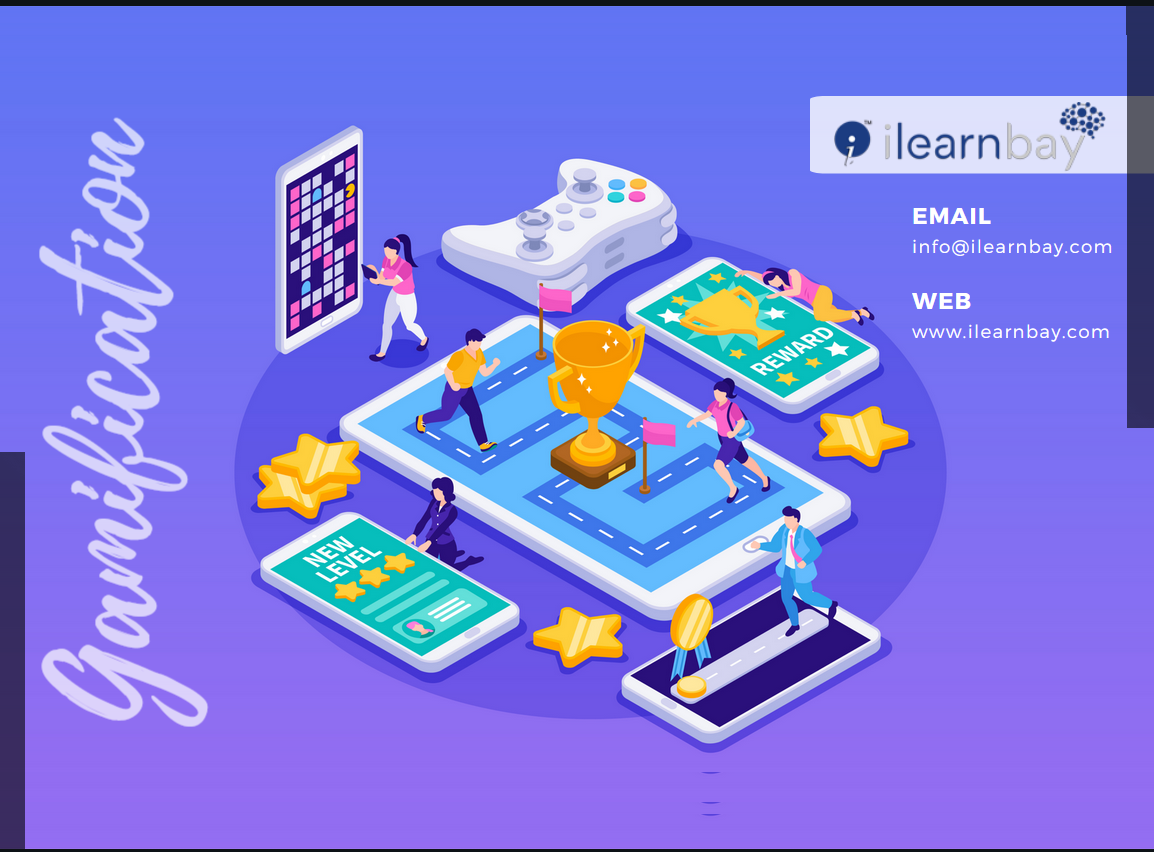
Gamification strategies for online learning
From a universal perspective, corporate training programs are a sort of drowsy seminars and snooze-worthy meetings. While gamification is an approach that can transform those mundane training programs into an engaging and dynamic learning experience that unlocks new levels of motivation, drives learner engagement, and results in better business performance.
Wondering how, in this article, we will discuss the basic concepts of gamification along with its implementation methods and the resultant beneficiary factors.
What is Gamification?
In its simplest form, gamification is “the use of game design elements in non-game contexts.”
(Source: https://dl.acm.org/doi/10.1145/2181037.2181040 – From Game Design Elements to Gamefulness: Defining Gamification).
How can gamification improve the training programs’ effectiveness?
Incorporating gamification elements like levels, rewards, and recognition allows employees to gain immediate recognition and motivation on the given course syllabus. We’ve listed some of the benefits of gamification elements in eLearning,
- Enhanced knowledge retention
The interactive elements captivate learners’ attention and make sure they are learning rather than simply attending those training sessions.
- Sustained engagement
The action of assessment followed by rewards gives the learners a feeling of accomplishment and satisfaction, which will even trigger them to continue the process in the future.
- Encourage collaboration
LMS integrated with social tools can encourage learners to share badges, levels, and leaderboards that foster community spirit among their peers and teams.
- Measurable feedback
The instant feedback on the learner’s progress allows them to rectify their shortcomings. Also, help them identify and sharpen their relevant skills
- Improved training results
Active participation helps learners get hands-on experience of essential ideas that promote better decision-making and a more cohesive workforce.
Top 10 gamification components every Gamified LMS should have:
Although adding gamification elements can yield numerous benefits, simply adding them without any careful reasoning cannot benefit more than the expected outcome. Hence, it’s required to have a well-defined instructional design accompanied by game element incorporation that can help businesses reap the maximum.
We will list some of the essential gamification elements that could help reap most of the learning benefits.
- Badges:
Including badges can help businesses acknowledge learners’ achievements and motivate them to continue and complete the allocated tasks with more involvement.
- Point system:
Offering points is a process of recognizing learners completing lessons and passing assessments, which encourage even the underperforming learner to learn with more engagement.
- Leaderboards:
Including friendly competition among your learners in the form of a leaderboard can help learners race among themselves to perform their best.
- Progress bar:
Although the progress bar acts as a visual report, it can also act as a friendly reminder for the learners to remind them how far they need to proceed to complete the expected learning target.
- Game levels:
Course plans with grouped content as levels drive the learner in the right expected direction. As the learner levels up, they implicitly gain the skills needed to move forward in their careers.
- Rewards:
Rewarding real prizes in the form of coupons and discounts assists businesses in leveraging the gamification result with better learning outcomes.
- Quizzes:
Incorporating quizzes can help enhance your learners’ knowledge retention and allow businesses to understand their level of understanding and expertise on the allocated course. 
- Virtual currencies:
Offering virtual currency as a token of appreciation for completing tasks and participating in discussions can encourage learners to collect them and use them to access new levels and premium content of the course.
- Avatars:
Allowing the learner to customize their avatar’s skin, outfit, accessories, and power levels based on the points, badges, levels or currencies can effortlessly create a competitive mindset with a personalized learning experience.
- Certification:
As the course completion certificate signals achievement, recognition of the learner’s accomplishment in the form of certificates motivates continued learning and skill attainment progress.
Ilearnbay – The gamified LMS for an effortless training enhancement
Incorporating gamified elements like points, badges, and rewards can improve the training completion and retention rate. Now, are you on a search, looking for the best way of transforming those plain and dull training programs into truly engaging and result-oriented sessions?
Then, ilearnbay must be the expected learning management solution incorporated with a gamification feature that can fulfill your learning/training demands effectively. ilearnbay has a vast library of pre-built gamified templates that could successfully help businesses considerably save more on resources, time, and finance requirements.
Ilearnbay also has highly customizable options, allowing the business to customize the reward system and game mechanics to fit the exact business needs.
Want to know more? Unlock your true potential and discover growth with us at https://www.ilearnbay.com/

- November 23, 2023
Competency management in LMS
In this digital era, businesses spend a bounty on finding more effective ways to manage their workforce’s skills and mapping them toward organizational development. Despite the ascending expenditure, the L&Ds strategies are hardly matching the corporate training expectations.
And in this article, we are going to discuss how integrating the Competency matrix with LMS can help organizations manage and track employee skills that, in turn, boosts the organization’s L&D initiatives.
So initially,
What are competencies?
Competencies encompass the essential skills, knowledge, and abilities needed to excel within a specific role or domain of expertise. In other words, competencies are a set of assessments, and the acquired score/grading of employees demonstrate their capability towards the assigned job.
What is competency-based training approach?
The competency-based training approach provides employees with a clear understanding of the requisite skills and knowledge for their roles, along with precise tracking of their progress.
Competencies fall into two categories: core and job specific. Core competencies are essential for all staff, regardless of their roles, while job-specific competencies certain to specific organizational positions.
How does a competency based LMS enhance corporate training programs?
Integrating a Competency Management System with a Learning Management System creates a comprehensive learning ecosystem that optimizes training relevance, learner engagement, skill development, and organizational alignment, ultimately contributing to improved performance and success.
Key benefits of a competency based LMS:
- Accurate skill assessment: The skill matrix integration enables accurate and continuous skill assessment. Competencies tracked and measured learning activities help in identifying areas of improvement and adapting learning strategies accordingly.
- Training plans to fill the skill gap: The matrix guides the design and implementation of training and development programs to enhance employees’ competencies and bridge skill gaps.
- Resource allocation: Competency matrices help L&D allocate training resources, tasks and responsibilities based on individuals’ areas of expertise more efficiently by focusing on high-priority competencies.
- Personalized Learning Paths: The LMS can create personalized learning paths for each employee based on their current competencies, skill gaps, and career aspirations. This tailored approach optimizes learning outcomes and engagement.
- Streamlined Training: Integrating competency with LMS ensures that learning activities and assessments are directly tied to the business requirements. This streamlines training efforts and prevents irrelevant or redundant learning content.
- Seamless Employee Development: Employees can track their skill progression and competency development over time. This transparency fosters a sense of ownership over their career growth and encourages proactive engagement with learning opportunities.
- Continuous Improvement: The competency based LMS allows organizations to continuously update and refine competency frameworks based on real-time feedback. This ensures that the organization remains agile and adaptive to changing skill requirements.
- Data-driven decision-Making: Competency-based LMS generates valuable data on employees’ skill development and progress. Organizations can use this data to make informed decisions regarding promotions, role changes, and talent management.
Conclusion:
In summary, a competency-based LMS enhances corporate training programs by tailoring learning experiences to individual needs, aligning training with organizational goals, improving performance, and enabling data-driven decision-making processes. It transforms training from a one-size-fits-all approach to a targeted, results-oriented strategy that contributes to the overall success of the organization.
Are you in search of a competency management system that could make a notable impact on team performance aligned with organizational goals? Your search stops here with ilearnbay, the competency based LMS equipped with the latest features to optimize your every corporate training initiative.
Ready to visualize your training ideas in action? Visit us at https://www.ilearnbay.com
- November 15, 2023
Best practices for blended learning with LMS
As digital transformation is across the board, equipping your employees with essential skill sets becomes one of the most crucial objectives of any business organization. If upskilling your existing workforce to fill the existing or the upcoming skill gap is your go-to option, then Blended learning solutions might be the smart and cost-effective solution you may find in the market.
Wondering how,
Today, in this blog, we assist you in discovering how you can make the most of your corporate training initiatives with Blended learning models and Blended learning implementation strategies.
Before delving deep into the ideologies, Let’s get to know about
What is Blended learning?
- Blended learning is a term applied to the practice of providing instruction and learning experiences through some combination of both face-to-face and technology-mediated learning. (Source: https://openbooks.col.org/blendedlearning/chapter/chapter-1-blended-learning/ )
Benefits of blended learning for employee training in corporate sectors
In the ever-changing technology landscape, every L&D practitioner or HR professional carries the responsibility to ensure continuous training for their employees to remain relevant in the business market. Although the traditional classroom/virtual Instructor-led/online training formats can deliver continuous learning, they carry their own bottlenecks, such as accommodation, transportation, and distractions other than the recourse’s actual allocated job.
To minimize distraction and optimize the corporate training initiatives, here comes a new digital learning environment for the rescue, called Blended Learning. By strategically combining online and in-person learning elements, blended learning creates a comprehensive training experience that maximizes learning outcomes and aligns them with the unique needs of every employee of the organization.
- Data-driven insights
Robust analytics and reporting features provide insights into learner behavior, engagement, and outcomes, enabling instructors and administrators to make data-driven decisions. - ROI
Blended learning can efficiently roll out training on a large scale with ease and also cut off the training cost, including travel, accommodation, and training materials. - Real-world learning experience
Blended learning encourages employees to practice newly acquired skills and knowledge in the workplace, reinforcing the learning outcomes. - Collaborative learning environment
Blended learning allows employees to interact with peers through online forums, virtual group projects, and in-person sessions. This collaboration promotes knowledge sharing, problem-solving, and networking. - Better knowledge retention experience
Blended learning components can encourage interactive learning through multimedia, interactive simulations, discussions, and collaboration tools, enhancing knowledge retention.
How to implement Blended learning in the workplace?
Knowing the advantages of Blended learning technology and the Benefits of Blended learning for skill development, are you eager to know the implementation steps? Then, let’s learn about Blended Learning LMS.
A Blended Learning LMS (Learning Management System) is a software platform designed to facilitate and support blended learning experiences. Blended Learning LMS platforms offer a combination of online and offline learning tools to accommodate various instructional approaches and modalities.
Generally, a standard LMS supports ILT classroom training, vILT virtual classroom training, and eLearning. With the Blended Learning LMS platforms, the instructor or the L&D officers can combine various training methods.
For example, the corporate trainer can create an introductory video or a link that needs to be visited by the learner to get admitted to the upcoming training session. Similarly, they can assign assessments to be done after the session, which can help the instructors know their learner’s level of understanding of the discussed topic.
Future-proof your corporate training with blended learning:
Digitalizing corporate training has already begun, and blended learning is playing a crucial role in it. Blended learning models optimize the training effectiveness while cutting off the cost to a greater extent. Consequently, incorporating Blended learning platforms supplementing the in-person training with digital content can assist employees to retain and apply the acquired knowledge that maximizes overall productivity.
Looking for the best Blended Learning LMS that could optimize your training session with all the discussed features? ilearnbay, the SaaS-based, corporate training LMS, might be the perfect option you could choose.
Want to learn more about our all-in-one, corporate LMS ilearnbay? Visit us at https://www.ilearnbay.com